
Jacks or Better Optimal Strategy: Play Smart & Win More
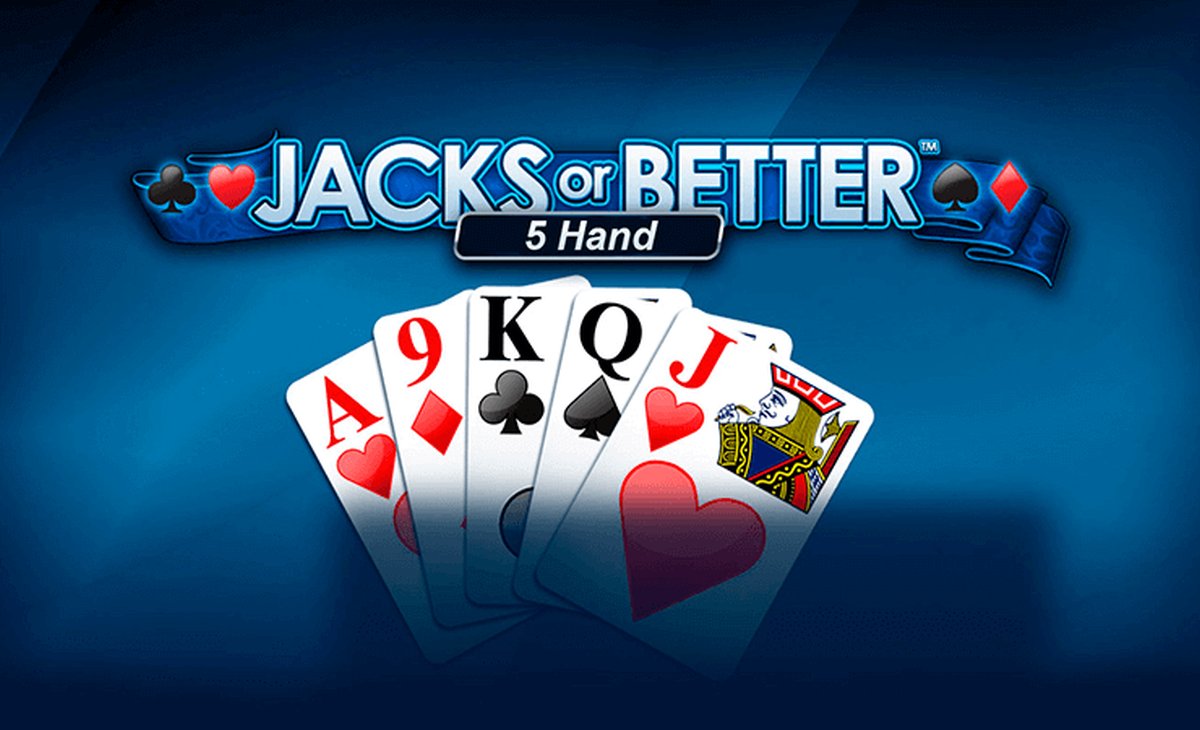
Jacks or Better video poker offers players one of the best odds in casino gaming, but only when played with perfect strategy. Many players lose money simply because they make poor decisions about which cards to hold and which to discard. When played with optimal strategy on a full-pay machine, Jacks or Better delivers a 99.54% return to player, making it one of the most favorable casino games available.
The difference between casual play and strategic play can mean the difference between losing money and nearly breaking even over time. Optimal strategy involves knowing exactly which cards to keep in every possible situation, from deciding between a low pair and four cards to a flush, to recognizing when to break up winning hands for better opportunities.
Understanding the fundamentals of proper play, selecting the right pay tables, and managing betting decisions all contribute to maximizing returns. Players who master these elements can transform Jacks or Better from a game of chance into a skill-based pursuit with predictable long-term results.
Understanding Jacks or Better
Jacks or Better is the most popular video poker game in casinos worldwide, featuring simple rules and clear winning combinations. Players need at least a pair of jacks to win, making it an ideal starting point for newcomers to video poker.
What Is Jacks or Better?
Jacks or Better is a video poker game based on five-card draw poker. Players receive five cards and can choose which ones to keep or discard for new cards.
The game gets its name from the minimum winning hand requirement. Players must have at least a pair of jacks to receive any payout.
This casino game uses a standard 52-card deck with no wild cards. Each hand is independent, and the cards are shuffled after every game.
The objective is simple: create the highest-ranking poker hand possible. Better hands pay more according to a fixed pay table.
Most casinos offer different versions of Jacks or Better. The “full pay” version returns 99.54% with perfect play.
Basic Rules and Gameplay
Players start by placing a bet of one to five coins. Five cards are dealt face up on the screen.
Players examine their hand and decide which cards to hold. They click on cards they want to keep, which become highlighted or marked as “held.”
After selecting cards to hold, players press the “draw” button. The unheld cards are replaced with new ones from the deck.
The final five-card hand determines the payout. Winning hands must be at least a pair of jacks, queens, kings, or aces.
Players can bet up to five coins per hand. Betting the maximum five coins is important because it offers a bonus payout for the royal flush.
The game moves quickly, allowing experienced players to play several hundred hands per hour.
Winning Hands and Hand Rankings
Jacks or Better uses standard poker hand rankings. The royal flush is the highest-paying hand, followed by straight flush.
| Hand | Description | Typical Payout (5 coins) |
|---|---|---|
| Royal Flush | A, K, Q, J, 10 of same suit | 800 |
| Straight Flush | Five consecutive cards, same suit | 50 |
| Four of a Kind | Four cards of same rank | 25 |
| Full House | Three of a kind plus a pair | 9 |
| Flush | Five cards of same suit | 6 |
| Straight | Five consecutive cards | 4 |
| Three of a Kind | Three cards of same rank | 3 |
| Two Pair | Two separate pairs | 2 |
| Jacks or Better | Pair of J, Q, K, or A | 1 |
Lower pairs (2s through 10s) do not qualify for payouts. These are considered losing hands despite being valid poker combinations.
The high card hands with no pairs also result in losses. Players must achieve at least jacks or better to break even on their bet.
Jacks or Better Optimal Strategy Fundamentals
Mastering Jacks or Better requires understanding key decision-making principles that maximize returns. The optimal strategy focuses on proper hold and draw choices, using detailed strategy charts, and recognizing hand value hierarchies to achieve the theoretical 99.54% return rate.
Optimal Hold and Draw Decisions
The foundation of Jacks or Better strategy lies in making correct hold and draw decisions for every possible hand combination. Players must evaluate each dealt hand and choose which cards to keep based on mathematical probability.
High pairs (Jacks, Queens, Kings, Aces) should always be held as they guarantee at least breaking even. These hands rank 11th on the optimal strategy hierarchy with a 1.5365 expected return.
Low pairs (2s through 10s) rank 15th with a 0.8237 expected return. Players should hold low pairs unless they have better options like four cards to a flush or straight.
The key decision points involve choosing between competing options. For example, when holding both a low pair and four cards to a flush, the four to a flush ranks higher at 13th position with a 1.2766 expected return.
Two pairs rank 10th with a 2.59574 expected return and should always be held. This represents one of the strongest non-premium hands in the game.
Strategy Charts and Tools
A comprehensive strategy chart lists all possible hand combinations in order of their expected value. The chart contains 36 different scenarios ranked from highest to lowest return.
The top rankings include:
- Royal flush (800.0000)
- Straight flush (50.0000)
- Four of a kind (25.0000)
- Four to a royal flush (18.3617)
Players should memorize the most common scenarios from positions 10-25. These cover the majority of hands dealt during typical play sessions.
Advanced tactics involve understanding rare exceptions and penalty card situations. For instance, four to a flush beats three to a royal when the royal includes a ten and ace with specific penalty cards present.
Modern players can use video poker trainers and hand analyzers to practice optimal decisions. These tools highlight mistakes and reinforce proper strategy implementation.
Understanding the Hierarchy of Hands
The strategy hierarchy ranks every possible hand combination by expected return value. Players must always choose the highest-ranking option when multiple plays are possible.
Premium hands occupy the top positions and require no decision-making. These include dealt royal flushes, straight flushes, four of a kind, and full houses.
Drawing hands form the middle tier. Four to a royal flush ranks 4th, while four to a straight flush ranks 9th. Three of a kind ranks 7th with a 4.3025 expected return.
High card combinations occupy lower positions but still provide positive expected value. Suited high card combinations generally outrank unsuited ones due to flush potential.
The bottom tier includes marginal plays like single high cards and three-card straight flush draws. These rank between positions 30-35 but still beat discarding everything, which ranks last at position 36 with a 0.3597 expected return.

Pay Tables and Game Selection
The paytable determines your potential return in Jacks or Better, with full-pay 9/6 machines offering 99.54% RTP when using optimal strategy. Casino game variations can significantly impact the house edge, making proper machine selection crucial for maximizing your winning potential.
Identifying 9/6 Jacks or Better Machines
Full-pay 9/6 Jacks or Better machines represent the gold standard for this casino game. The “9/6” designation refers to the payouts for full house and flush hands respectively.
Players should look for these specific payouts on the paytable:
| Hand | Full-Pay Payout |
|---|---|
| Royal Flush | 800 |
| Straight Flush | 50 |
| Four of a Kind | 25 |
| Full House | 9 |
| Flush | 6 |
| Straight | 4 |
The full house paying 9 coins and flush paying 6 coins creates the optimal 99.54% return to player rate. Many casinos now offer reduced payouts like 8/5 or 7/5 variations to increase their house edge.
Finding true 9/6 machines has become increasingly difficult. Most casinos have shifted to lower-paying versions to boost profits.
Comparing Pay Tables and Variations
Different paytable variations dramatically affect the return to player percentage and require strategy adjustments. Even small changes in payouts create significant long-term differences.
Common Jacks or Better variations include:
- 8/5 Jacks or Better: 97.30% RTP
- 8/6 Jacks or Better: 98.39% RTP
- 7/5 Jacks or Better: 96.15% RTP
- 6/5 Jacks or Better: 95.00% RTP
The house edge increases substantially with reduced payouts. An 8/5 machine costs players an additional 2.24% compared to full-pay 9/6.
Players must examine each paytable carefully before playing. The most common reductions target full house and flush payouts, but some variations also reduce straight or two pair payments.
Lower-paying machines require modified strategies to achieve maximum returns. However, even perfect play on reduced paytables cannot match the returns of basic strategy on full-pay machines.
Maximizing Returns Through Betting
Smart betting decisions directly impact your potential winnings in Jacks or Better video poker. Playing with the maximum number of coins unlocks bonus payouts that significantly boost your return percentage.
Why Bet Max Coins?
Most Jacks or Better machines require players to bet max coins to access the full pay table. The optimal strategy assumes a five-coin bet per hand.
When players bet fewer than five coins, they miss out on proportional payouts for winning hands. A four-coin bet doesn’t simply reduce winnings by 20%.
Single coin vs. max coin betting:
- One coin: Lower return percentage
- Five coins: Access to full 99.54% return rate
The difference comes from how machines calculate payouts. Royal flush bonuses only activate with maximum coin play.
Players who bet less than max coins face a significant mathematical disadvantage. The house edge increases substantially without the bonus structure.
Bonus Payouts and Royal Flushes
The royal flush creates the biggest difference between regular and max coin betting. This hand provides a disproportionate bonus when betting five coins.
Royal flush payout structure:
- 1 coin bet: 250 coins returned
- 2 coin bet: 500 coins returned
- 3 coin bet: 750 coins returned
- 4 coin bet: 1,000 coins returned
- 5 coin bet: 4,000 coins returned
The five-coin royal flush pays 800-to-1 instead of the expected 1,250 coins. This bonus accounts for approximately 2% of the game’s total return.
Without this bonus payout, the return rate drops to around 97.54%. The 2% difference makes max coin betting essential for optimal play.
Other hands maintain proportional payouts regardless of coin amount. Only the royal flush offers this dramatic betting bonus.
Winning Hand Decision-Making
Making the right choice with each hand separates winning players from losing ones in Jacks or Better. The key lies in understanding which combinations to hold based on mathematical probability and expected returns.
How to Play High Pairs and Low Pairs
High pairs (Jacks, Queens, Kings, Aces) should always be held since they guarantee at least an even money payout. Players never break up high pairs to chase other hands like straights or flushes.
The decision becomes more complex with low pairs (2s through 10s). These pairs don’t pay immediately but offer solid potential returns.
Low pairs beat most drawing hands in expected value. A player should hold a low pair over:
- Four cards to an inside straight
- Three cards to a straight flush (in most cases)
- Two unsuited high cards
The only hands that beat low pairs are four cards to a flush or four cards to an outside straight with high cards.
When to Hold Two Pair or Three of a Kind
Two pair ranks high on the strategy chart with an expected return of 2.60. Players should never break up two pair to chase a full house by discarding one pair.
The correct play is to hold both pairs and draw one card. This guarantees a 2-to-1 payout while giving a chance at a full house.
Three of a kind offers strong winning potential with an expected return of 4.30. Players hold all three matching cards and draw two new ones.
Never break up three of a kind to chase other hands. The combination already pays 3-to-1 and provides excellent odds for four of a kind or a full house.
Drawing for Straights and Flushes
Four cards to a flush ranks higher than low pairs on the optimal strategy chart. The expected return of 1.28 makes this a profitable long-term play.
Players should draw one card when holding four suited cards. This beats holding single high cards or low pairs in most situations.
Four cards to an outside straight offers different values based on high card content:
- With 0-2 high cards: Expected return of 0.68
- With 3-4 high cards: Expected return of 0.53-0.60
Outside straights generally beat inside straights. Inside straights with multiple high cards can sometimes justify the draw over single high cards.
Advanced Tactics for Four to a Royal
Four cards to a royal flush represents one of the most valuable drawing hands with an expected return of 18.36. This combination beats everything except dealt winning hands.
Players must break up made flushes, straights, and even three of a kind to draw for the royal. The massive 800-coin jackpot makes this mathematically correct.
The strategy requires holding the four royal cards even when discarding a sure winner. For example, if dealt K♠ Q♠ J♠ T♠ 7♣, the correct play holds the four spades despite having a made flush.
Four cards to a straight flush also ranks extremely high at 3.53 expected return. This beats two pair and most other strong hands, making it another priority hold.
Long-Term Success and Bankroll Management
Smart bankroll management directly affects how long players can stay in the game and their chances of success. Video poker variance requires specific funding strategies that differ from other casino games.
Managing Variance in Video Poker
Video poker creates natural swings that affect short-term results. Even with perfect strategy, players face losing streaks that can drain bankrolls quickly.
Royal flush payouts create the biggest variance factor. These hands occur roughly once every 40,000 hands but provide 25% of the game’s total return to player value.
Players need bankrolls that can handle extended periods without hitting major hands. A typical session might include hundreds of hands with only small wins or losses.
The RTP rate of 99.54% on full-pay machines means players lose about 0.46% over time with perfect play. However, short-term results can vary dramatically from this average.
Variance affects different bet sizes differently. Higher denomination machines create larger swings but offer the same percentage returns.
Practical Bankroll Strategies
Casual players should maintain bankrolls of 300 to 500 times their average bet amount. This provides enough cushion for typical variance without risking significant financial harm.
Serious players need larger bankrolls of 1,000 times their betting unit. Higher stakes and longer sessions require more protection against bad runs.
Setting clear win and loss limits protects bankrolls from emotional decisions. Many experts recommend stopping after losing 20% of a session bankroll or doubling the starting amount.
| Player Type | Bankroll Size | Example ($1 bet) |
|---|---|---|
| Casual | 300-500x bet | $300-$500 |
| Serious | 1000x bet | $1,000 |
Progressive jackpots require larger bankrolls due to increased volatility. The altered payout structure creates bigger swings between winning and losing sessions.
Players should never play stakes that make them uncomfortable with potential losses. Bankroll management works best when combined with emotional discipline and realistic expectations about results.
Frequently Asked Questions
Players often need guidance on strategy charts, payout structures, and training resources. These questions address optimal play principles, beginner fundamentals, and how different pay tables change strategic decisions.
What are the key principles of the optimal strategy for Jacks or Better?
The optimal strategy prioritizes hands based on mathematical expected value. Players must always keep dealt paying hands like pairs of jacks or better, straights, flushes, and full houses.
Four cards to a royal flush takes priority over almost everything except dealt paying hands. This play returns 18.36 units on average compared to other options.
High pairs (jacks through aces) should always be kept over drawing to flushes or straights. The expected return of 1.54 units makes this a clear choice.
Players should keep low pairs over most drawing hands. A low pair returns 0.82 units while four cards to a flush only returns 1.28 units.
Three cards to a royal flush beats keeping a low pair in most situations. This draw offers better long-term value at 1.29 units expected return.
How does one use a strategy chart effectively in Jacks or Better?
Strategy charts rank all possible plays from highest to lowest expected value. Players find their hand situation and choose the option that appears highest on the list.
The chart uses a hierarchical system with 36 different play categories. Each category shows the average return in parentheses next to the play type.
When multiple options exist for one hand, players compare rankings on the chart. The play with the lower number always takes priority over higher-numbered options.
Charts include specific exceptions for rare situations. These footnotes cover penalty card situations that slightly change the optimal play.
Players should memorize the top 15-20 plays first. These cover the most common situations that occur during regular play.
What beginner tips are crucial for improving your chances in Jacks or Better?
New players should always bet the maximum five coins per hand. This activates the full payout for royal flushes at 800 to 1 odds.
Never keep kickers with pairs. Holding extra cards reduces the chances of improving to three of a kind or better hands.
Learn to identify high cards (jack, queen, king, ace) versus low cards. High cards can form paying pairs while low cards cannot.
Practice distinguishing between inside and outside straight draws. Outside straights offer better odds because they complete at both ends.
Focus on full-pay machines that return 99.54% with optimal play. Avoid short-pay versions that reduce returns on key hands.
Where can one find a reliable Jacks or Better strategy trainer online?
The Wizard of Odds website offers comprehensive strategy charts and training tools. Their optimal strategy returns 99.54% when played correctly on full-pay machines.
Many online casinos provide free video poker games for practice. These allow players to test strategies without risking real money.
Video poker training software analyzes player decisions and provides feedback. These programs highlight mistakes and suggest correct plays.
Strategy card generators create customized charts based on specific pay tables. Players can print these for reference during practice sessions.
Mobile apps offer convenient practice options with built-in strategy guidance. These tools help players learn optimal decisions through repetition.
How do payout structures affect strategy in Jacks or Better video poker games?
Full-pay Jacks or Better uses a 9/6 structure (9 coins for full house, 6 for flush). This creates the 99.54% return rate that optimal strategies target.
Reduced payouts on full houses and flushes change drawing decisions. Lower flush payouts make suited card combinations less valuable to pursue.
Royal flush payouts affect maximum coin play importance. The 4000-coin jackpot (800 to 1) only applies when betting five coins maximum.
Short-pay machines alter the value of drawing to flushes and full houses. Players must adjust their strategy charts to match the specific pay table.
Different payout structures can reduce overall returns by 2-3 percentage points. This significantly impacts long-term profitability for players.
What variations in strategy occur between different Jacks or Better pay tables?
The 8/5 pay table reduces flush payouts from 6 to 5 coins. This makes four-card flush draws less attractive compared to other options.
When full house payouts drop to 8 coins, drawing to full houses becomes less profitable. Players should prioritize other drawing hands instead.
Short-pay tables affect the ranking of marginal plays like suited connectors. These combinations lose value when flush payouts decrease.
The 6/5 Jacks or Better variant significantly changes flush draw strategy. Many flush draws become unprofitable compared to high card holds.
Progressive jackpot versions may alter royal flush strategy. Higher jackpots can make drawing to royals more valuable than standard strategy suggests.